User:PotatoMuncher/Biology Headcanons
This page is for showing off my headcanons regarding the animals and plants of the Pikmin franchise. Most of the information here is not to be taken as fact. Canon information will be written in bold.
Pikmin
This section will be about my headcanons for the various types of Pikmin.
Red Pikmin
Red Pikmin (Pikminicus rubrus) are one of the most common Pikmin types currently known. This is partly due to their extensive range spanning across most of Pangaea Proxima.
They have developed a large, thorny growth on their face to fend off attackers. Their flame-resistant cellulose gives them an immunity to extremely high temperatures and also helps convert flames into nutrients for flower growth.
Red Pikmin’s flowers come in purple or pink and resemble the flowers of the Madagascar periwinkle.
Yellow Pikmin
Yellow Pikmin (Pikminicus auribus) are able to adapt to a large variety of habitats, such as tropical springs and frozen forests.
Their large ear-like structures allow them to be thrown higher than most other Pikmin and also give them the ability to glide short distances.
Yellow Pikmin have much more dexterous hands than other Pikmin, allowing them to safely handle the dangerous bomb-rocks. They can also dig faster, as they use their ears as a sort of built-in shovel.
Their flowers are used to redirect electricity out of the Pikmin’s body, although they can also choose to expel electricity through their limbs.
The flowers also resembles the white flowers of a Face Wrinkler tree.
Blue Pikmin
Blue Pikmin (Pikminicus caerula) are the most endangered of the Pikmin types due to their extremely specific environmental needs and the hazardousness of their aquatic environments.
Purple Pikmin
Purple Pikmin (Pikminicus yokozunum) are the largest of the Pikmin types, and one of the rarest. Exclusively found in dark caverns, they tend to struggle outside of their home range. Purple Pikmin are almost entirely blind, using their antennae to navigate through caves. They possess a short layer of fuzz, likely to keep themselves warm in the frigid caverns in which they inhabit.
Purple Pikmin’s flowers are rather large for a Pikmin, and resemble the huge red petals of Rafflesias. They emit a fowl stench like a Rafflesia, too.
Other Ambuloradicids
This section is for my headcanons on members of the Ambuloradicids aside from the Pikmin.
This section is currently empty. Check in later!
Animals
This section is for my headcanons about the fauna of the franchise. The animals here aren’t listed in any particular order, except for the list going by class/clade.
Mammalia
The following animals are in this class.
Bearded Amprat
The bearded amprat (Porcellus barbavolta) is a rodent that is highly adaptable to any environment. Ranging from snowy forests to warm springtime fields, this animal’s adaptations work well in both biomes.
Recently, studies have shown something strange: Yellow Pikmin are found extremely commonly throughout its range, more than even the Red Pikmin!
Habitat isn’t the only thing the two share, however. Just like the Yellow Pikmin, bearded amprats can conduct electricity, although to a much lesser extent. The animals often rub their shaggy beards to generate static electricity, which they use to incapacitate their prey.
Vehemoth Phosbat
The vehemoth phosbat (Tectupervus pteromys) is a large flying mammal descended from bats, although they have lost most resemblance of their ancient ancestors.
Vehemoth phosbats live in dark caverns in cold areas, such as the area known as the Distant Tundra. As such, their eyes are extremely sensitive to light, and will automatically close to protect their vision.
Vehemoth phosbats fly rather slowly, in order to conserve energy for their main form of hunting: Sucking their prey in like a vacuum.
The animals also seem to be able to vanish from sight via light-absorbing chromatophores.
A vehemoth phosbat’s children, simply referred to as the “common phosbat” or “phosling”, are much smaller than their adult form. Being highly underdeveloped, they seem to burst open and die when hit with a bright enough light.
A “phosbat pod” is a sort of “nest” that baby phosbats are born out of, although it is now understood that phosbat pods are actually egg sacs rather than a separate organism.
In order to prepare for the harsh winter, vehemoth phosbats will travel to tropical forests and beaches to feast upon fruits. Due to the large amount of time it takes for a phosbat to digest its food, the fruits will sustain them over the entire season.
Pancrustacea
The following animals are in this clade.
Segmented Crawbster
The segmented crawbster (Parastacoidea reptantia) is a large, lobster-like crustacean that inhabits deep caves, but individuals have been spotted near rivers and lakes.
They may appear friendly, but do not be fooled: Segmented crawbsters are extremely aggressive, attempting to roll over any and all creatures that find themselves in its den.
They have ten legs: four small pairs near its tail, a small, slender claw for grabbing prey, and a much larger claw that takes the shape of a club to crush prey.
Beneath the segmented crawbster’s body is a bioluminescent sac that protects the creature’s heart.
Although they were initially thought to be descendants of Holocene lobsters, further research has shown relation to the Armurk, and by extension, the Vetigastropoda.
Cephalopoda
The following animals are in this class.
Sputtlefish
The sputtlefish (Pseudocephalopoda florascens) is a species of squid endemic to the Garden of Hope. When one first looks at a specimen, it may appear that it lacks arms. However, beneath a sputtlefish’s mouth are four pairs of arms that have been reduced to stubs with no use.
The animal’s short beak is protected by a long feeding tube that leads prey right into the sputtlefish’s jaws.
Sputtlefish have a symbiotic relationship with zooxanthella, allowing them to get nutrients from photosynthesis. Their mantle is transparent and lets one view the dark purple ink sac.
Waddlepus
Pycnogonida
The following animals are in this class.
Beady Long Legs
The beady long legs (Pseudoarachnia armoralis) is a species of chelicerate descended from the sea spiders of the Holocene, although they have lost many of their legs.
Found in caves, beady long legs are ambush predators, waiting on the ceiling of the cave to drop down and surprise its prey.
The beady long legs is covered in a layer of wax that protects them from parasites like mitites. Similarly to other arachnorbs, beady long legs have a “mouth” at the top of their body that contains a long tongue used to slurp up liquified Pikmin remains.
Unlike other arachnorbs, however, are the bell-shaped feet of a beady long legs that lack toes.
The animal’s range is shrinking due to competition from its more aggressive cousins.
Raging Long Legs
The raging long legs (Pseudoarachnia furiendis) is an the largest known arachnorb so far. They are extremely aggressive, attempting to trample smaller arachnorbs and even other members of their species.
Raging long legs have much larger feet than their relatives, making them more successful at hunting prey. A raging long legs joints are covered in purplish brown hair.
The animal’s hide is typically rather hard, too hard for even Rock Pikmin to break through. However, when exposed to light, the raging long legs skin softens, allowing Pikmin to attack it.
Raging long legs can often be seen flattening out large areas for unknown reasons.
Man-at-Legs
The man-at-legs (Pseudoarachnia navaronia) are rather strange, even with the strangeness that all arachnorbs inherit.
Without its mechanical exoskeleton, the man-at-legs is actually rather peaceful. Due to the fact that their feet are too thin to properly crush Pikmin, they must merge with a mechanical component that hunts food for the arachnorb.
After merging with the mechanical casing, the animal’s skin becomes numb and soft, allowing them to open the weapon compartment Sightings of man-at-legs without the robotic shell are rather rare.
Shaggy Long Legs (subsp. tropicum)
The tropical shaggy long legs (Pseudoarachnia capillum tropicum), is one of two subspecies of shaggy long legs.
The reason for this subspecies having fur is unknown, as its climate would typically discourage excessive fur coatings.
Shaggy Long Legs (subsp. arcticum)
The arctic shaggy long legs (Pseudoarachnia capillum arcticum), is one of two subspecies of shaggy long legs.
This subspecies’s long coat of fur helps protect it from the cold, and its white color makes it blend in with the snow, making it harder for predators to spot them.
Baldy Long Legs
This subsection is currently empty. Check back in later!
Groovy Long Legs
This subsection is currently empty. Check back in later!
Anode Dweevil
This subsection is currently empty. Check back in later!
Fiery Dweevil
This subsection is currently empty. Check back in later!
Hydro Dweevil
This subsection is currently empty. Check back in later!
Iceblown Dweevil
This subsection is currently empty. Check back in later!
Munge Dweevil
This subsection is currently empty. Check back in later!
Venom Dweevil
This subsection is currently empty. Check back in later!
Volatile Dweevil
This subsection is currently empty. Check back in later!
Titan Dweevil

|
In a nutshell: This subsection contains MAJOR spoilers for the final boss of Pikmin 2. Do NOT read ahead if you don’t want the game’s ending to be spoiled to you. |
The titan dweevil (Mandarachnia gargantium) is the largest member of the dweevil family and also the most mysterious.
Titan dweevils have an instinctual urge to collect shiny objects and put them on their backs. Similarly to other members of the family, they live deep underground.
At some point in time, an individual had seemingly been controlled by Louie. Exactly how he managed to do so is unknown.
Titan dweevils release a chemical that seems to attract small glowing insects known as Bioluminescent Heartflies.
Aves
The following animals are in this class.
Burrowing Snagret
This subsection is currently empty. Check back in later!
Burrowing Snarrow
This subsection is currently empty. Check back in later!
Pileated Snagret
This subsection is currently empty. Check back in later!
Waddlequaff
This subsection is currently empty. Check back in later!
Mockiwi
This subsection is currently empty. Check back in later!
Crested Mockiwi
This subsection is currently empty. Check back in later!
Elongated Crushblat
This subsection is currently empty. Check back in later!
Animals (Scrapped)
This section is for my headcanons of the scrapped fauna of the Pikmin franchise, including proposed common and scientific names.
Pikmin 1
The following scrapped enemies are from the first Pikmin game.
Stoneshell Rockhurler
The stoneshell rockhurler (Pseudosus chukkulinae), also known as the "Iwagen", is an amphibian with the strange ability to create and launch rocks. They are able to do this by consuming small pebbles and sand particles, combining the two to create large boulders.
 A taxidermied stoneshell rockhurler.

Greater Spectrefly
The greater spectrefly (Anisopterus spectralis), also known as the "Usuba", is a large, dragonfly-like bug with large blue eyes and clear skin, allowing one to see the spectrefly’s internal organs.
They also possess a long tail that they use to incapacitate prey before feeding.
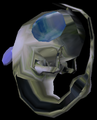 A greater spectrefly shot on a black background.

Kingback Flint Beetle
The kingback flint beetle (Pilli imperialis), also known as simply the "Kingback", is a large relative to the flint beetles, although they resemble the spotted flint beetle (Pilli striaticus) more than its other cousins.
Kingback flint beetles disguise themselves as the frightening emperor bulblaxes to defend themselves from predators.
 A kingback flint beetle buried in the ground.

Pikmin 3
The following scrapped enemies are from Pikmin 3.
Skittish Joustmite
The skittish joustmite (Trilobitins veloci) is a relative of the burrow-nits, although unlike its cousins, it attacks out of fear rather than hunger. Skittish joustmites are always highly frightful, and will attack anything they deem as a threat.
 A photo of a skittish joustmite.

Bubbly Blowhog
The bubbly blowhog (Sus bulla) is the most shy of the blowhogs, often spending their days hidden away in hard-to-reach caves.
The substance inside of their "elemental gland" produces bubbles rather than fire on contact with air.
 A photo of a bubbly blowhog.

Striped Berry-leech
The striped berry-leech (Pseudohirudo baccamora), also known as the "Kakureimo", is a large creature descended from slugs, although they more closely resemble leeches.
Their name is given due to their stripes and intense love for the berries of the Burgeoning Spiderwort (Pikflora baccae conditus).
 A photo of a striped berry-leech.

Leech-like Whiskerpillar
The leech-like whiskerpillar, also known as the "Moguraimo", is the larval form of the striped berry-leech, and therefore shares the same love of berries.
With the description of the species, several searches have been conducted to locate the adult form of the closely related Ravenous Whiskerpillar (Lepidoptera pluckieus).
 A phto of a leech-like whiskerpillar.

Crystalline Wollyhop
The crystalline wollyhop (Amphicaris gemma), also known as the "Crystal Maro Frog", is an animal related to the wollyhops, but with one major difference: the crystalline casing on the wollyhop’s underside.
Occasionally, the crystal shell of a crystalline wollyhop will not form correctly, and will instead appear as a semisphere. Individuals with this condition live a much shorter live.
 A photo of a crystalline wollyhop with a deformed shell.

Bell-Headed Long Legs
The bell-headed long legs (pseudoarachnia campania), also known as the "Iwadama", is an arachnorb closely resembling to the beady long legs (Pseudoarachnia armoralis). However, the bell-headed long legs is differentiated from the beady long legs in that its head is shaped like a bell, and the top of the main body is soft, unlike the beady.
 A photo of a bell-headed long legs. This specimen has a rare color defect causing it to look like a beady long legs. Typically, individuals are blue with a pink upper body.

Armored Sheargrub
The armored sheargrub (Himagea armoralis), sometimes called the "Buriko", is a member of the mandiblard family, although it is rather strange compared to other members.
Most notably, the armored sheargrub’s shell is much harder than its relatives, having to be killed with Rock Pikmin or bomb-rocks.
They also possess the strange ability to change color. While alive, the shell is normally orange. When an armored sheargrub latches onto an animal, its shell turns white, and upon death, the shell turns purple.
 A photo of a deceased armored sheargrub.
