List of Pikmin 2 staff
Nintendo employees directly involved in the development of Pikmin 2.
Shigeru Miyamoto

Producer
Shigeru Miyamoto is a producer and video game designer for Nintendo who helped supervise Pikmin 2's development. His involvement was much less with Pikmin 2 than the first game, letting the directors Shigefumi Hino and Masamichi Abe take charge in reforming Pikmin for the sequel.[1]
Immediately after the first game was finished, he had green-lit the production for Pikmin 2, requesting to Shigefumi Hino that it be finished within a year while the momentum of having established a new franchise was still strong. The game would undergo numerous extensions, with the final development time being about two and a half years.[2]
Takashi Tezuka
Producer
A producer and video game designer for Nintendo who helped supervise Pikmin 2's development. He would communicate with the two directors, Shigefumi Hino and Masamichi Abe, and the rest of the development team about gameplay and other elements.[3]
Shigefumi Hino
Director
Directed Pikmin 2, alongside Masamichi Abe. He primarily focused on graphic design and visual presentation, such as the atmosphere, setting, and characters in the game.[3] He influenced the new Pikmin types, the designs of treasures, and much of the game's overall aesthetic.
- When deciding on colors for a new Pikmin variety, the Purple Pikmin were originally a dark green, almost black, akin to the color of scarab beetles. Shigefumi Hino insisted he wanted to see a Pikmin type that resembled an eggplant in color. Their stems can be seen glowing green in early footage.[4]
- Real life objects would be chosen as the main collectible to help convey the scale of Pikmin, and were intentionally given outdated or discontinued designs, creating a nostalgic feel for older audiences.
Similar to that of the ship parts, he had also initially wanted all of Pikmin 2's treasures to be round, as Pikmin carry objects in circular formations. This proved too limiting however, and eventually, treasures with different shapes were allowed (though small rod-shaped items that a single Pikmin can pick up and carry were seamlessly implemented).[5]
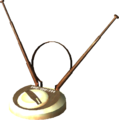 Many treasures have an older, "Shōwa-era" feel to them.
 Branded objects were intentionally given discontinued designs.


Masamichi Abe
Director
Directed Pikmin 2 alongside Shigefumi Hino, primarily focusing on gameplay elements. He supervised the programmers, rebuilt the game mechanics from the first game, and directed the level design of the caves.[1]
Within Pikmin 2's files, one can find Masamichi Abe's folder /user/Abe/, which contains parameter files that control many key gameplay elements:
- Cave lighting.
- Gameplay objects (clogs, bridges, geysers, Burgeoning Spiderworts, mold, and buried treasure).
- Spawning conditions and locations for objects and enemies in above-ground areas.
- Pellet, carcass, and treasure carry weights, and their Poko and seed values.
- Leader and Pikmin interactions, like movement speeds and throw heights.
- Day lengths and lighting.
- 2-Player Battle mode stages.
Several story mode cave layouts and two Challenge Mode levels, Explorer's Cave and Green Hole, are prefixed with "ABE" or "ABEM" in their filenames, likely designed by him.


Yoshikazu Yamashita
Main System Programming
One of the main programmers for Pikmin 2. He created the base systems that all enemies use, as well as the vast list of enemy parameters shared across them, which control important aspects like health or move speed.
He also programmed the behavior for the game's most foundational enemies: Bulborbs, Dwarf Bulborbs, and Pellet Posies. This also includes the Orange Bulborb, Hairy Bulborb, and Snow Bulborb variations.[6]
Yuji Kando
Pikmin & Game System Programming
One of the main programmers for Pikmin 2. He was in charge of several core systems, like Pikmin AI and the behavior of controllable leaders.
- Responsible for all Pikmin interactions, like throwing, attacking, tripping, and carrying behavior.
- Programmed various gameplay objects that Pikmin interact with, like pellets, clogs, and bridges.[7]
2-Player Battle is also the result of an intense, though admirable side commitment, developing the mode's gameplay and specifications entirely by himself.[5]
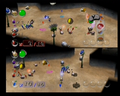 2-Player Battle mode was programmed by Yuji Kando on the side.

Katsuhito Nishimura
Creature & Level Programming
One of the main programmers for Pikmin 2. He programmed the cave generation, as well as the vast majority of enemies in the game.
He also created configurations for a few things, like the swappable camera settings, several presets for controller rumble, and shadows for the Pikmin, leaders, and enemies.[8]
- Creatures programmed by Katsuhito Nishimura include the Bulbears, Bulborb Larva, Fiery Bulblax, Water Dumple, Bulbmin, Blowhogs, Cannon Beetles, Gatling Groink, Flint Beetles, Sheargrubs, Cloaking Burrow-nit, Ravenous Whiskerpillar, Anode Beetle, Snitchbugs, Careening Dirigibug, Antenna Beetle, Jellyfloats,Dweevil, Wollyhops, Candypop Buds, Creeping Chrysanthemum, Skitter Leaf, Honeywisp, Empress Bulblax, Snagrets, Arachnorbs, and Segmented Crawbster.
Inside /user/Nishimura/ on the disc, one can find additional parameters for the camera, controller rumble, and shadows.
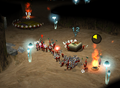 The way caves generate was handled by Katsuhito Nishimura.

Naoya Morimura
Creature Programming
One of the programmers for Pikmin 2. He is responsible for programming a few mechanically-complex enemies, such as the Waterwraith, though the biggest fruit of his dedication can primarily be seen in the form of one of the game's more sophisticated features, the Piklopedia, which he was the sole programmer for.[5]
This includes the entirety of its functionality, from the menu interactivity, the spawning and display of the creature—even the Pikpik carrot tossing.
- Creatures programmed by Naoya Morimura include Mitites, the Hermit Crawmad, Bloysters, Unmarked Spectralids, the Mamuta, Breadbugs, the Emperor Bulblax, the Waterwraith, and decorative plants.
- Aside from the Piklopedia (and in extension, the Treasure Hoard), he also programmed the 2-Player Battle menu and High scores menu. All of these menus are identifiable by the same signature scrolling effect.
He also programmed the animated countdown from 10 to 0, used for the end of day and Challenge Mode.[9]
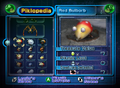 Naoya Morimura developed all of the Piklopedia's functions.

Yuzuru Ogawa
Screen Programming
One of the programmers for Pikmin 2. He programmed some commonly seen screens in the game, as well as the main HUD elements, like the health meters, sun meter, Pikmin count, spray count, and more.
Throughout gameplay, the player routinely comes across a simplistic menu that fades or flies in and off the screen. This menu was programmed by Yuzuru Ogawa, and is designed to be reused many times throughout the game.
The pause menu is programmed by Yuzuru Ogawa as well.[10]
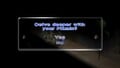 The menu that gets repurposed in many places in Pikmin 2.
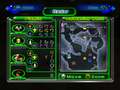 Pikmin 2's pause menu.


Hiroyuki Kono
Screen Programming
One of the programmers for Pikmin 2. He programmed several screens that use extensive animation, like the area selection menu, result menus (end of day, caves, debt/treasure completion), and all of the large animated text splashes, such as "Final Floor!", "Ready... Go!", or "Time Up!".[11]
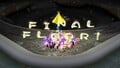 Hiroyuki Kono programmed these splash animations.
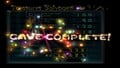 Cave complete!
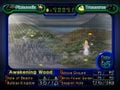 The area selection menu in Pikmin 2.


Yasushi Ebisawa
Effects & Title Programming
Programmed the title screen, and particle effects system. This also includes menus adjacent to the title screen, such as the saved game selection menu, options menu, and bonuses menu.[12]
Inside /user/Ebisawa/ on the disc, there exists an archive of all the particle effects in the game, as well as parameters for some of the title screen's features and easter eggs.
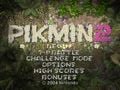 The highly interactive title screen to Pikmin 2.
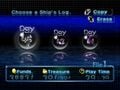 Choose a Ship's Log.
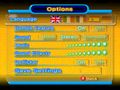 The options menu.
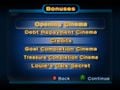 The bonuses menu.
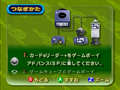 The e-reader connection screen.


Yutaka Hiramuki
Level Design
Designed cave layouts and Challenge Mode stages for Pikmin 2. In extension, all assets related to caves and cave generation are kept inside /user/Mukki/ on the disc.
- His levels are identifiable by the prefix "MUKI" in the filename.
- The Challenge Mode stages attributed to Yutaka Hiramuki include: Brawny Abyss, Twilight Garden, Cavernous Abyss, Hazard Training, Hidden Garden, Secret Testing Range, Sniper Room, and Emperor's Realm.
All information related to in-game cutscenes are also stored inside his folder. Other level designers for caves include Masamichi Abe, Taku Matoba, Minoru Narita, and Atsushi Miyagi.

Taku Matoba
Level Design
Designed cave layouts and Challenge Mode stages for Pikmin 2. His folder /user/Matoba/ on the disc also contains a configuration file that lists every Challenge Mode stage in the game.
- His levels are identifiable by the prefix "MAT" in the filename.
- The Challenge Mode stages attributed to Taku Matoba include: Red Chasm, Trampled Garden, Cryptic Cavern, Concrete Maze, Dweevil Nest, Three Color Training, Rumbling Grotto, Subterranean Lair, and Cave of Pain.
Icons for treasures are also stored inside his folder, which are used for the Treasure Hoard. Other level designers for caves include Masamichi Abe, Yutaka Hiramuki, Minoru Narita, and Atsushi Miyagi.


Minoru Narita
Level Design
Designed cave layouts and Challenge Mode stages for Pikmin 2.
- His levels are identifiable by the prefix "NARI" in the filename.
- The Challenge Mode stages attributed to Minoru Narita include: Novice Training, Lost Toy Box, Creator's Garden, Hot House, Collector's Room, Cave of Snarls, The Giant's Bath, Abduction Den, and Breeding Ground.
Other level designers for caves include Masamichi Abe, Yutaka Hiramuki, Taku Matoba, and Atsushi Miyagi.


Kazumi Totaka
Sound Director
A composer and sound effect designer for Pikmin 2. He is known for voicing Olimar, Louie, the President, the Hocotate ship[2], as well as designing many of the strange electronic sounds and ambiences heard in the game.[13] The background sounds heard during the Hocotate ship's dialogs are also designed by Totaka[14]; its speech is notably designed similar to that of K.K. Slider's singing voice.
- He composed Concrete 1, Concrete 2, Concrete 3, Grass, Relax, and a number of special cave songs tied to unique caves or sublevel themes: Emergence Cave 1, Emergence Cave 2, Submerged Castle, Jellyfloat, Giant Breadbug, Fire, Bulblax Kingdom, Frontier Cavern, Snagret Hole, Flooded Stump, and Toy Railroad.
- All of the special cave themes are comparatively last-minute additions, given by their simple filenames (like
new_00_0.cnd), and the instruments used having some of the last internal IDs. - Two other themes he composed include the Waterwraith's chase theme, and the 2-Player Battle mode music.
For his sound direction, he aimed to create a sense of "imaginary nature", achieved by using synthesized sounds to mimic insects and birds.[2]
Hajime Wakai
Composer
The main composer for Pikmin 2. He composed most of the soundtrack. Hajime Wakai's audio design often involves the usage of instruments and synthesized sounds from the Kurzweil K2500 and Roland SC-88.
- He composed the music for all cutscenes, menus, and above ground areas. He also composed the common boss battle theme, Titan Dweevil boss theme, and a number of cave songs, the rest of which were composed by Kazumi Totaka.
- Cave songs he composed include Soil 1, Soil 2, Soil 3, Metal 1, Metal 2, Metal 3, Tile, Toy, and Key Get (Challenge Mode).
For the previous game, he did the voices for the Pikmin, and returned to do the same for Pikmin 2, though it was once planned for someone else to do it.[2]
Mitsuhiro Hikino
Sound Programming
Programmed the dynamic music system for Pikmin 2, including area themes, boss battles, and the procedural cave music system. He is also a skilled audio designer and composer, having created sound effects and music for other Nintendo games.
Although he did not compose music for the game, he had a great sense of artistic direction, and focused on gradually implementing features that would elevate the potential of the other audio staff's work. The final product of the adaptive music system arose from this "back-and-forth" between him and the sound team.[2]
He designed or managed a few additional sound effects for Pikmin 2 as well:[14]
- Spray sounds (the heavily effected fart/burp, petrified enemy crackling, or the strange whistling when an ultra-spicy spray is active).
- Sounds for the Hermit Crawmad, Gatling Groink[15], Giant Breadbug, small Dweevils, and Bloysters.
- Wind heard in the Valley of Repose, and birdsong heard in the Awakening Wood and Wistful Wild.
He also implemented the "Pikmin!" sound clip when the game boots, as his last initial is in the filename for the sound effect. pikmin_greet_new.h.32.c4 uses "h", where as music files contain "w" instead, for Hajime Wakai.
Takahiro Watanabe
Sound Effect Programmer
The main sound effect designer for Pikmin 2. He designed the majority of sound effects for the game, including most enemy creatures, obstacles, hazards, the Hocotate ship's engine, and cutscenes. Sounds originally created by Hajime Wakai and Hideaki Shimizu in the previous game would be remastered or revitalized by Takahiro Watanabe for the sequel, often with new layers or effects.
He usually uses a large collection of sound libraries in his work, even for the vocalizations of enemies[14], but for the Creeping Chrysanthemum in particular (and in extension, the Waterwraith), he uses his own voice, as he wasn't able to mold any existing sounds in his library to fit the image of the creature.[2]
Motoi Okamoto
Script
The main writer for the Japanese version of Pikmin 2. He was also involved in writing for the previous game, and was part of the team who programmed JSYSTEM, a development library later used in Pikmin 2.[1]
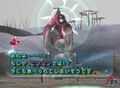 Motoi Okamoto wrote the script for Pikmin 2.

Kazumi Yamaguchi
Piklopedia Script
A graphic designer for Nintendo. He assisted with writing entries for the Piklopedia in Pikmin 2.
Hiroaki Takenaka
Total Design Manager
A graphic designer, character designer, and 3D modeler for Nintendo. He was a design manager for Pikmin 2.
Makoto Miyanaga
Map Design
Map designer for Pikmin 2. He took a lot of the photographs that would be used as textures for areas in the previous game.[16]
Atsushi Miyagi
Map Design
A graphic designer and level designer for Pikmin 2. He came up with some cave units for the game, and designed some cave unit layouts.
One cave unit he designed is room_16x17r_conc, a large "subterranean jungle" of pipes and concrete, with sun shining through a drainage vent. He disliked the feeling of dark spaces as his work tended to keep him in locked in front of a computer for long periods of time, so jumped at the chance to include natural sunlight and references to the above-ground world in his cave units. Cherry blossoms were also added to some areas within the Awakening Wood to make them feel rejuvenating.[17]
In the files, he is also attributed to a few cave unit layouts and two Challenge Mode stages. These levels all contain "MIYA" in the filename:
- He is attributed to designing two Challenge Mode stages, Snack Pit and Bully Den.
- There are just four cave unit files attributed to him:
1_MIYA_manh2_conc.txt,1_MIYA_bunki_tile.txt,1_MIYA_mid_toy.txt, and1_MIYA_big_kusachi.txt.
All of his attributed cave layouts only contain a single room. 1_MIYA_manh2_conc.txt was designed for his Snack Pit stage. 1_MIYA_bunki_tile.txt is the large room containing the Ranging Bloyster, used in The Giant's Bath and the Hole of Heroes. 1_MIYA_big_kusachi.txt and 1_MIYA_mid_toy.txt are both unused, and contain only a bucket or xylophone in the center, the latter of which appears in an early Challenge Mode sublevel.
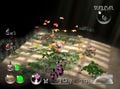 One of the cave units designed by Atsushi Miyagi.
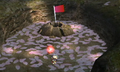 The Awakening Wood is dotted with petals.


Shinko Takeshita
Map Design
Map designer for Pikmin 2.
Shinichi Ikematsu
Map Design
Map designer for Pikmin 2.
Eiji Mukao
Map Design
Map designer for Pikmin 2. He was in charge of designing the Valley of Repose and Wistful Wild.[18]
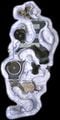 The Valley of Repose.
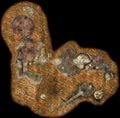 The Wistful Wild.


Hiroshi Matsunaga
Creature Design
A creature designer for Pikmin 2, including modeling and animation.
Michiho Hayashi
Creature Design
Michiho Ito (maiden name Michiho Hayashi) is a creature designer for Pikmin 2, including modeling and animation.
Kenta Motokura
Creature Design
A creature designer for Pikmin 2, including modeling and animation.
Daisuke Kageyama
Creature Design
A creature designer for Pikmin 2. In the previous game, he was likely the designer for the Bulborb; this is alluded to in the creatures scientific name.
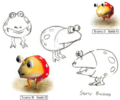 Sketches of the Bulborb from the Pikmin Official Player's Guide.

Yoshiyuki Oyama
Creature Design
A creature designer for Pikmin 2, including modeling and animation.
Kenji Shinmoto
Creature Design
A creature designer for Pikmin 2, including modeling and animation.
Wataru Yamaguchi

Clay Illustration
Wataru Yamaguchi is the artist for the clay models seen in promotional material and the box art. For the previous game, he was also in charge of creating some of the artwork, mixing computer graphics with real world imagery. Clay was chosen instead for Pikmin 2 instead as it had a warm, handcrafted feel, though the same technique of compositing Pikmin over photographs would continue to be used.
Over a hundred photographs of background scenery would often be taken in a single shoot. The skeletons of the clay Pikmin are made with copper wire, usually with a support wire poking out the back.[19] Several complete models of Pikmin would be made at first, but as he became more accustomed to the process, Wataru Yamaguchi found himself reusing the same poses over and over, eventually creating only the bodies or arms of Pikmin which could be combined digitally in post.
For Pikmin 2's North American box art, it was originally planned to use a real lobster for the Hermit Crawmad.[20] Wataru Yamaguchi's cat, "Chi-chan", was lured with food in one of the promotional images; upon seeing the final piece, Masamichi Abe studied some of the objects he had photographed and decided to include the green milk bottle opener as an actual treasure in the game.[5]
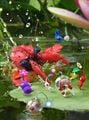 The North American box art.
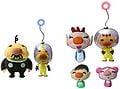 Artwork of the characters.
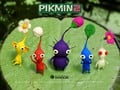 Promotional image for Pikmin 2.
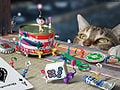 The wallpaper with Wataru Yamaguchi's cat that inspired the Lightning Bolt.
 "Chi-chan", as she appears on the Japanese version of the Time Capsule.


Taeko Sugawara
Object Design
A graphic designer for Nintendo that helped with Pikmin 2 object design, and Pikmin 1 map design.
Hidekazu Ohta
Treasure Design
A designer for Pikmin 2's treasures.
Tokihiko Toyoda
Screen Design
The designer for Pikmin 2's interface. He was also in charge of the interface for the previous game, where his name can be found hidden off-screen.
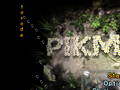 Tokihiko Toyoda's name hidden out of view.

Keijiro Inoue
Effects Design
Keijiro Inoue was the particle effect designer for Pikmin 2, not to be confused with the particle effects programmer.
Koji Kitagawa
Title & World Map Design
Koji Kitagawa is the artist for the title screen and area selection menu in Pikmin 2. Yasushi Ebisawa and Hiroyuki Kono helped with programming the title screen and area selection menu, respectively.
- The title screen of Pikmin 2.
- The area selection menu in Pikmin 2.
Takumi Kawagoe
Demo Design
Takumi Kawago is a cinematic designer for Nintendo. He has created storyboards, camera systems, cutscenes and in-game cutscene tools for games,[21][22] likely assisting with Pikmin 2 in that aspect.
- One of Pikmin 2's in-game cutscenes.
Naoki Mori
Demo Design
Naoki Mori is a storyboard artist for Nintendo. He likely assisted with storyboarding Pikmin 2's cutscenes.
Satomi Asakawa
Demo Design
Satomi Asakawa is a computer graphics animator and character designer for Pikmin 2. She was in charge of modeling and animating the pre-rendered cutscenes, and designed the President.[23]
A few enemies in the series are also designed by her. She likes to create "chubby characters", reflected in the President's final design and some of her attributed creatures, such as the Mamuta and Puffstool in the previous game, and the Waterwraith for Pikmin 2.[24]
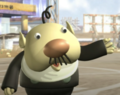 The President in the opening cutscene.
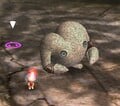 The Mamuta was a creature designed by Satomi Asakawa in the previous game.
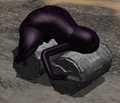 The Waterwraith.


Daisuke Nobori
Demo Design
Daisuke Nobori helped create cutscenes for Pikmin 2.
References
- ^ a b c Motoi Okamoto interview on Gamasutra
- ^ a b c d e f Audio staff interview for Pikmin 2 on Nintendo Online Magazine
- ^ a b Developer interview for Pikmin 2 on IGN
- ^ YouTube video of prerelease Pikmin 2 footage
- ^ a b c d Nintendo Dream Vol. 112 on the Internet Archive
- ^ Yamashita folder in the Pikmin 2 decompilation on Github
- ^ Kando folder in the Pikmin 2 decompilation on Github
- ^ Nishimura folder in the Pikmin 2 decompilation on Github
- ^ Morimura folder in the Pikmin 2 decompilation on Github
- ^ Ogawa folder in the Pikmin 2 decompilation on Github
- ^ Kono folder in the Pikmin 2 decompilation on Github
- ^ Ebisawa folder in the Pikmin 2 decompilation on Github
- ^ YouTube video showcasing ambiences created by Kazumi Totaka
- ^ a b c Detailed spreadsheet that documents sound sources used in the series, maintained by fans on Google Sheets
- ^ YouTube video showcasing other games with sound design by Mitsuhiro Hikino that use the Gatling Groink's mortar sound (at 01:24)
- ^ Makoto Miyanaga interview on Inside Zelda: Twilight Princess
- ^ Atsushi Miyagi interview on Inside Zelda: Twilight Princess
- ^ Eiji Mukao interview on Nintendo's website
- ^ Clay Pikmin tutorial on Nintendo Online Magazine
- ^ Wataru Yamaguchi interview on Shigesato Itoi's website
- ^ Ocarina of Time interview on Iwata Asks: Ocarina of Time 3D: Original Staff
- ^ Takumi Kawagoe interview on Inside Zelda: Twilight Princess
- ^ Satomi Asakawa interview on Inside Zelda: Twilight Princess
- ^ Satomi Asakawa interview on DigiPen University